Goodsex
Goodsex is a Newspeak word for the only sexual act allowed in the Oceania of 1984: intercourse between husband and wife, performed solely to beget children and "without physical pleasure on the part of the woman." Defined in the novel's appendix, "The Principles of Newspeak," it is the positive half of a two-word system that governs the entire sexual life of a Party member, its negative counterpart being sexcrime, which swallows everything else and is in principle punishable by death. The word matters far beyond the bedroom. It is the sharpest sign of the Party's campaign to kill the sex instinct, or, failing that, to distort and dirty it; it is the chastity norm that Winston Smith sees bound up with political orthodoxy; and it is the rule whose violation, above all by Julia, becomes the novel's one available rebellion. Its logic runs to a terminus the closing pages make explicit: the abolition of the orgasm, and the love of Big Brother that fills the space where desire once stood.
Definition and Newspeak mechanics
The appendix presents goodsex as the twin of sexcrime, the two words by which, it says, a Party member's sexual life is entirely regulated. Sexcrime covers fornication, adultery, homosexuality and other perversions; it also covers "normal intercourse practised for its own sake," so that even a lawful marriage bed falls into crime the moment enjoyment, rather than reproduction, is the object. The licensed act is defined with clinical spareness: normal intercourse between man and wife, for the sole purpose of begetting children, and without physical pleasure on the part of the woman. The standard names no male pleasure and no male duty. The woman's body is the surface on which the Party's prohibition is inscribed, while the man's part in the act goes unremarked.
The word works as the best Newspeak words work: by absorption rather than description. It belongs to the B vocabulary, the class of terms "deliberately constructed for political purposes," whose point is to impose a desirable mental attitude on the person using them. In the perfected language the concepts of liberty and equality are to be swallowed up in the single word crimethink, and objectivity and rationalism in oldthink; in the same way all sexual conduct is compressed into the pair goodsex and sexcrime, so that no heretical position between them can be named. As the appendix observes, in Newspeak it is seldom possible to follow a heretical thought further than the perception that it is heretical; beyond that point the necessary words are non-existent. The construction follows the logic Syme delights in explaining over lunch in the canteen: a word contains its opposite in itself, so that "bad" is dispensable once "ungood" exists. Goodsex is the Party's good; everything other than it is not a different kind of sex but the same kind of crime.
Enforcement: marriage, duty and the death penalty
Goodsex is not a description of marriage but a command, backed by a machinery of permissions, prohibitions and punishments. Every marriage between Party members had to be approved by a committee, and permission was always refused when the couple gave the impression of being physically attracted to one another; marriage had no recognised purpose but to beget children for the service of the Party. Inside marriage, intercourse was to be regarded as "a slightly disgusting minor operation, like having an enema." The same policy produced the Junior Anti-Sex League, whose members advocated complete celibacy for both sexes and whose scarlet sash was its emblem, and the floating proposal that all children be begotten by artificial insemination, artsem in Newspeak, and brought up in public institutions. Winston reads the logic clearly: the Party's real, undeclared purpose was to remove all pleasure from the sexual act; not love so much as eroticism was the enemy, inside marriage as well as outside it; and the Party was trying to kill the sex instinct or, if it could not be killed, to distort it and dirty it. The unforgivable crime, consequently, was promiscuity between Party members, the one offence the accused in the great purges invariably confessed to. On the penal side the appendix is absolute: every deviation from goodsex is equally sexcrime, and in principle all of them are punishable by death.
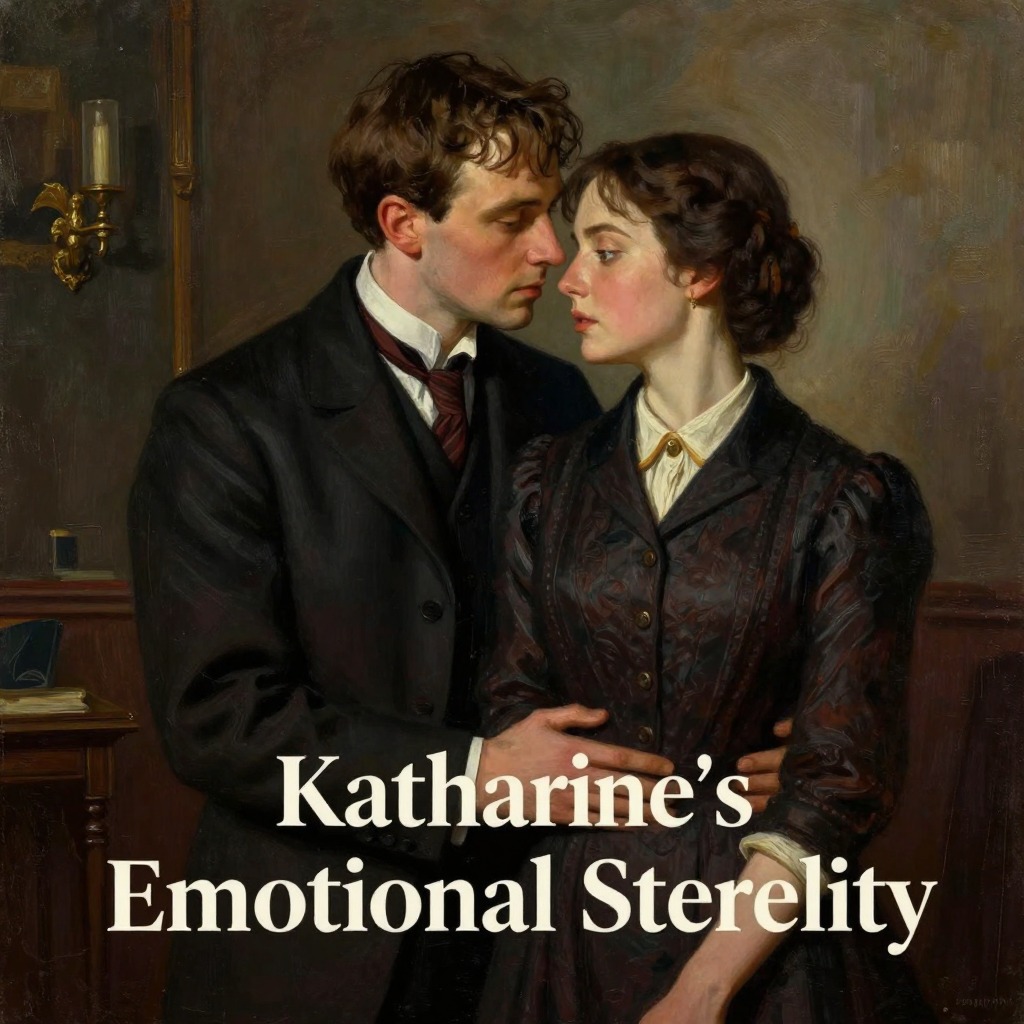
The rule's human cost is written into Winston's marriage to Katharine. A tall, fair-haired woman whom he privately nicknamed the human sound-track, she had not a thought in her head that was not a slogan; she flinched and stiffened at his touch, so that embracing her felt like embracing a jointed wooden image. Yet it was Katharine who insisted on the scheduled performance. She reminded him each morning that the act had to be done that evening and must not be forgotten, and she had two names for it: "making a baby" and "our duty to the Party." The weekly duty continued, once a week quite regularly, until no child appeared and they parted. Winston's rebellion against this regimen is itself formulated in its terms. What he wanted, more even than to be loved, was to break down that wall of virtue; "The sexual act, successfully performed, was rebellion," and in the Party's accounting desire was thoughtcrime. Goodsex is the precise point where the Party's thought-system takes hold of the body's most private act.
Chastity as a power technology
The deeper rationale surfaces in O'Brien's interrogation, where the Party's sexual programme is exposed as a drive for power for its own sake. The Party, he explains, is interested "solely in power" — not wealth, luxury, long life or happiness — and power is demonstrated by making subjects suffer, by inflicting pain and humiliation, by tearing human minds to pieces and putting them together again in new shapes of its own choosing. Against Winston's objection that such a world could not endure, O'Brien promises that the sex instinct will be eradicated, that procreation will become an annual formality like the renewal of a ration card, and that "We shall abolish the orgasm," with neurologists already at work on the problem. In the world he describes there will be no loyalty except loyalty towards the Party and no love except the love of Big Brother. Goodsex is the first, domestic stage of that programme: the stage at which desire is not yet abolished but rationed, channelled into a sanctioned act whose only permitted surplus is a child for the Party.
Julia, whose practical cunning the novel repeatedly sets against Winston's metaphysics, supplies the explanation of why the Party needs such a rule. "When you make love you're using up energy; and afterwards you feel happy and don't give a damn for anything," she tells him in the church belfry; the Party cannot allow that satisfaction, so it keeps its members perpetually hungry — "all this marching up and down and cheering and waving flags is simply sex gone sour." The narration confirms her insight: there is a direct, intimate connection between chastity and political orthodoxy, because the fear, hatred and lunatic credulity the Party requires are kept at the right pitch by bottling down a powerful instinct and using it as a driving force. The sex impulse is dangerous to the Party, and the Party has turned it to account. Goodsex is the name of that bottling-down.
The rule's fate: rebellion and conversion
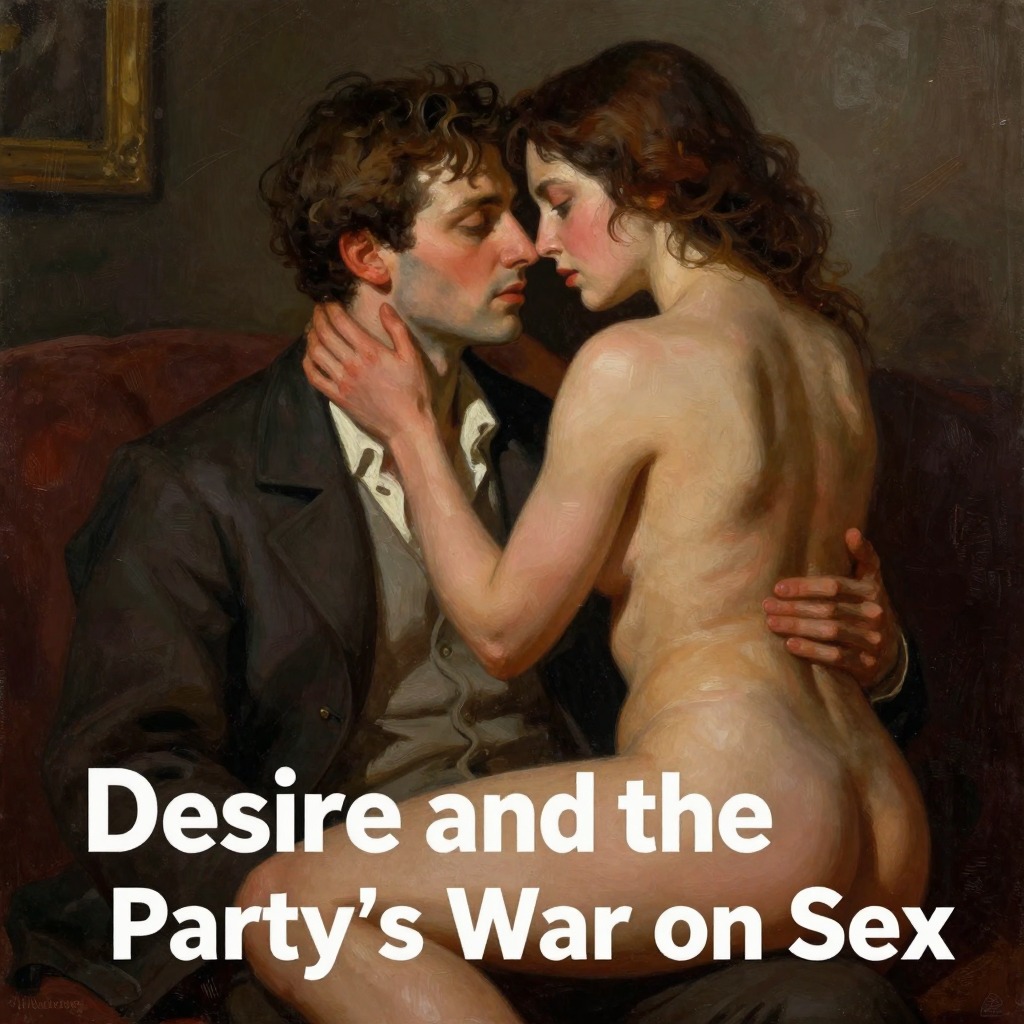
Goodsex meets its direct refutation in Julia, whose cheerful promiscuity is the novel's lived answer to the Party's chastity. She wears the scarlet sash of the Junior Anti-Sex League as camouflage, cried out "Swine! Swine! Swine!" during the Two Minutes Hate, and then rips the sash off in the clearing on their first afternoon together and flings it onto a bough. She tells Winston she is "corrupt to the bones," that she has done this "scores of times" before, "always with Party members"; and Winston, watching her tear off her clothes in a gesture that seemed to annihilate a whole civilisation, comes to believe that the animal instinct, the simple undifferentiated desire, is the force that will tear the Party to pieces. Their embrace, he reflects, was a battle and its climax a victory — "a blow struck against the Party" and therefore "a political act." Julia's creed, that "If you kept the small rules you could break the big ones," stands as the exact inversion of goodsex: she obeys the letter of orthodoxy so thoroughly that her violation of its core becomes the one freedom left to her.
The ending measures the true reach of the rule. After the Ministry of Love, Winston and Julia meet once by chance in the Park on a biting March day, and each confesses the other's betrayal; her waist has thickened and stiffened, and her single glance at him is "full of contempt and dislike." The love whose function had been to pass on "the secret doctrine that two plus two make four" is dismantled. The man who once wrote that "Freedom is the freedom to say that two plus two make four" sits in the Chestnut Tree Café tracing "2 + 2 = 5" in the dust, and the last sentence completes the trajectory that begins with goodsex: "He had won the victory over himself. He loved Big Brother." The Party has not merely suppressed desire but replaced it; the energy that goodsex was designed to bottle has been diverted into the love of Big Brother. And the appendix's warning stands fulfilled: in Newspeak it is seldom possible to follow a heretical thought further than the perception that it is heretical, because beyond the Party's words the necessary words do not exist.